
Contents
Fse-plugholing-v3.svg (SVG file, nominally 900 × 600 pixels, file size: 7 KB)
Summary
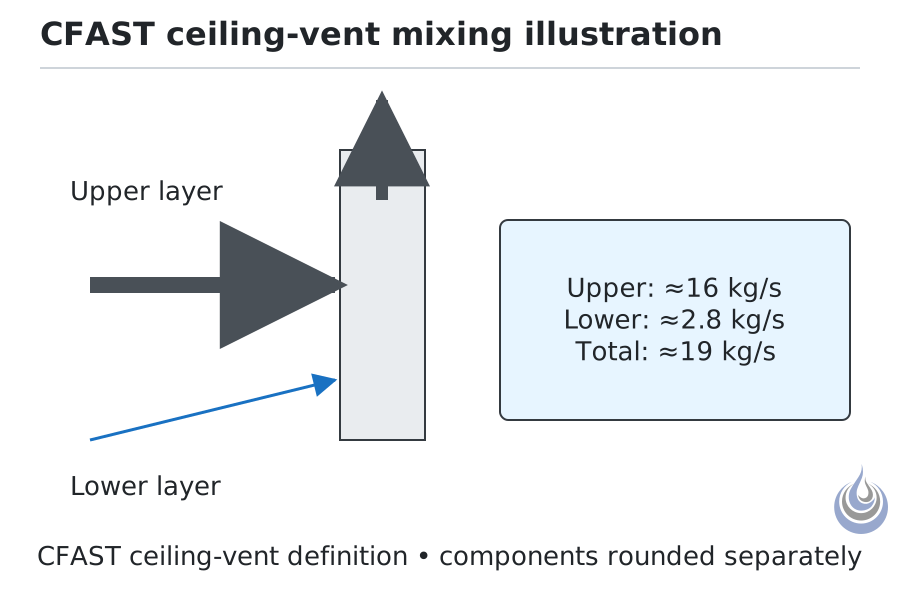
A layer-weighted vent calculation retains the different mass contributions of hot smoke and cooler air. Based on Peacock et al. (2026), pp. 21–22.
Original illustration for Plugholing, level 3 Advanced.
- Source basis: Peacock et al. (2026), pp. 21–22, Equations 4.11–4.14; derived illustration in calculations/plugholing.py. Create an original visual; redraw, do not copy source figures.
- Alt text: Smoke and cool air feed one exhaust, with separate upper-layer and lower-layer mass contributions.
- Accuracy notes: Use published CFAST definition, not Cooper’s F threshold. Rounded total need not equal rounded components exactly. This is not a fan-system test.
Licensing
New drawing by Fire Safety Academy. © Fire Safety Academy.
File history
Click on a date/time to view the file as it appeared at that time.
| Date/Time | Thumbnail | Dimensions | User | Comment | |
|---|---|---|---|---|---|
| current | 16:44, 2 November 2026 | | 900 × 600 (7 KB) | Emma (talk | contribs) | Watermark: Fire Safety Academy logo icon, 70 px, 45 % opacity |
You cannot overwrite this file.
File usage
The following page uses this file:
